Many of the utilities we work with are already relatively advanced when it comes to understanding climate risk, particularly on the planning side. What we consistently see, though, is a gap between recognizing those risks and implementing solutions.
This is why Brown and Caldwell is proud to announce the recent release of the Water Utility Climate Alliance (WUCA) Climate Resilient Engineering Design Guidance for the Water Sector. The industry-specific, free resource closes the gap between planning and implementation—helping utilities translate abstract insights into integrated climate considerations across planning, design, and operations.
“Bringing planners, engineers, and operators together creates real ‘aha’ moments as utilities work through scenarios and learn from one another. The value isn’t just the guidance itself, but the conversations it sparks and how those continue beyond the room.”
- Dr. Tess Sprague, Strategic Lead on the project and Resilience Lead at Brown and Caldwell
Developed by 14 of the nation’s leading water providers, this collaboration brings safety, reliability, and the people who run these systems every day to the forefront of decision-making.
Follow along for the full series as we explore how the WUCA Engineering Design Guidance answers: what does it look like to design for what’s ahead—not what’s already happened?
What hotter days and longer heatwaves mean for utilities
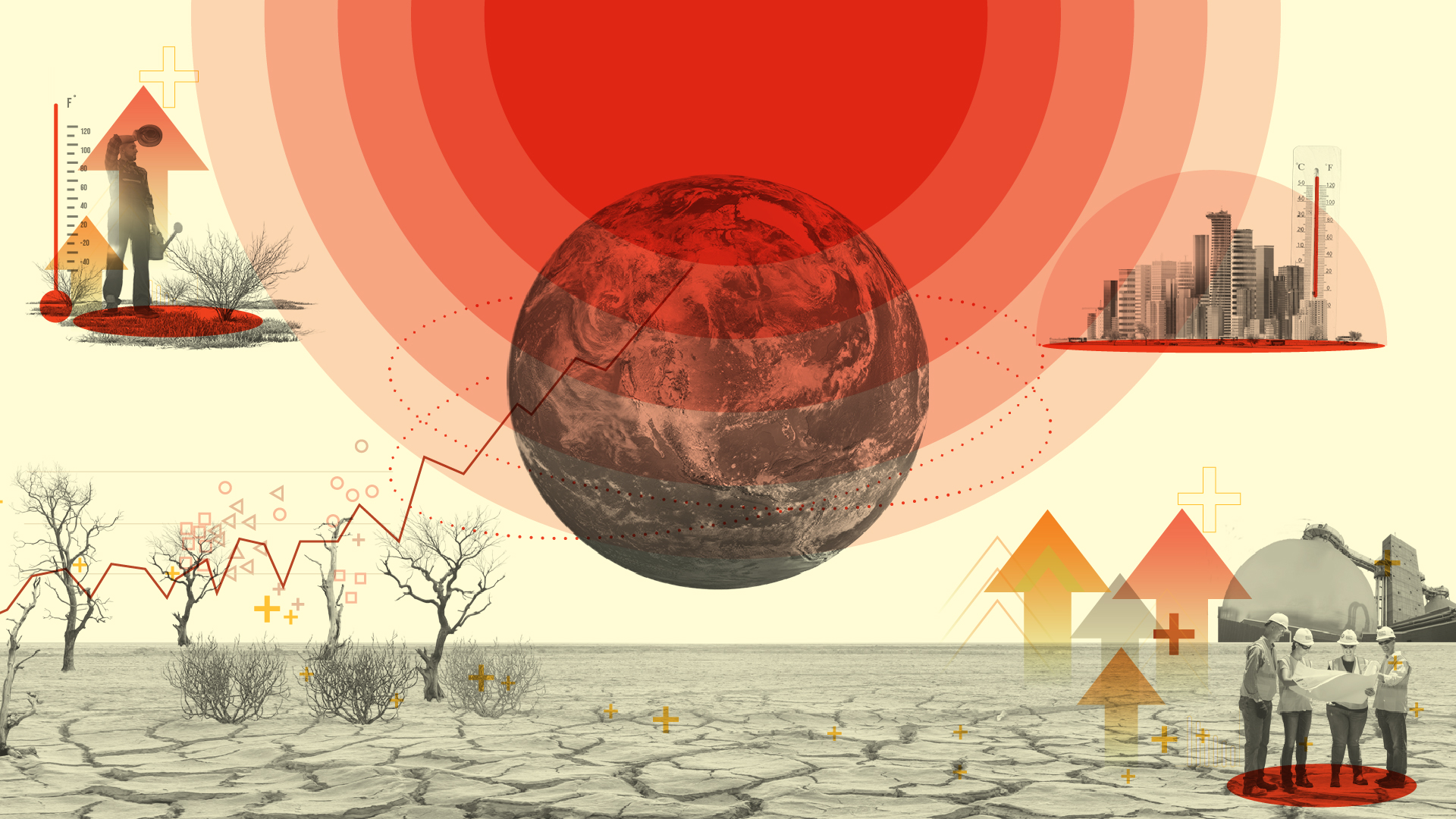
Historical weather data doesn’t tell the full story. High heat conditions are changing faster than historical weather data trends can project. Yet, utilities still have a responsibility to maintain reliable service to their communities through climate events and impacts.
For example, American Society of Heating, Refrigerating and Air Conditioning Engineers (ASHRAE) relies heavily on historical weather data. Given recent record-breaking heat events, ASHRAE warns that failing to consider future climate changes could border on professional negligence. Yet they don’t provide explicit temperature projections, leaving utilities to develop their own strategies to plan for the heat waves of the future.
The WUCA Engineering Design Guidance bridges that gap—without relying solely on historical weather data—so utilities across the country can make informed design decisions for an unpredictable, volatile future.
Climate considerations are no longer bound by geography. Extreme heat is relative. As temperatures rise and heatwaves linger, utilities are looking to their peers in historically warm climates for support. For example, Southern Nevada Water Authority (SNWA) was an incredible support on the project to utilities in Oregon and Washington who have faced recent years of record-breaking heat.
High heat affects workplace safety—not just assets. From the beginning of the project, the WUCA team made personnel safety as an early deciding factor in which project types to prioritize. With planners, designers, operators, and maintenance staff in the room together, the human element stayed at the forefront of decision-making.
The completed WUCA Engineering Design Guidance has human operability integrated as a core tenet of climate-resilient design.
Proactively designing for future high temps and heat waves
The WUCA Engineering Design Guidance not only makes the abstract actionable—it lays the groundwork for real-time, empowered, national collaboration during evolving climate conditions.
“Utilities are done talking about whether climate change is a problem—they want to get to solutions. There’s only so much you can learn from a desk study. The real value comes from hearing how other utilities are actually dealing with these challenges in real time.”
- Dr. Tess Sprague
Utilities are building flexibility in from the start. The WUCA Engineering Design Guidance is adaptable, which enables strategies for extreme heat or drought to transfer between regions. Utilities can customize solutions that factor in local context, such as regulations or resource availability. Where historical resources and standards leave a gap in real application, the WUCA Engineering Design Guidance project provides actionable guidance beyond the status quo.
Previously, utilities would go to ASHRAE and design against historical averages. The WUCA Engineering Design Guidance encourages using more conservative estimates for temperature extremes so practitioners design for the upper bounds of projected conditions. A dedicated appendix in the document addresses designing for future conditions by providing methods for incorporating climate projections into design processes, such as how many degrees to add to the peak day and the average day, and offering examples and checklists for practitioners.
As high temperatures and heat waves continue to paint a different picture than historical data can report, this culture shift sets utilities up to avoid costly redesigns and remain operational through unprecedented heat.
Designing for higher temperatures does not mean higher costs. There is a misconception that if you choose a temperature that is too high, your design will get too expensive. While this may be true for HVAC equipment—that is only one part of your overall design.
What fails during climate events and impacts are instruments that get cooked in the heat, pavement that buckles, or pipes that burst. Untraceable costs, such as adding a half inch of expansion joint or extra shade, could make all the difference in a heat wave.
The WUCA Engineering Design Guidance is full of customizable strategies—but they are not necessarily “new” or more costly. They are proven high heat solutions working in other parts of the country, now being shared and adapted to new geographies for whatever lies ahead.
The LongView™: flexibility over costly fixes and redesigns
The WUCA Engineering Design Guidance bridges the gap between historical assumptions and emerging realities—equipping utilities to make safe, informed, and flexible decisions across the life cycle of their assets.
“Not everything is feasible right now, but there are design choices you can make today that allow adaptation later. Resilience isn’t always about spending more upfront—it’s about designing with flexibility and a longer planning horizon in mind.”
- Dr. Tess Sprague
So how do utilities make sure that every dollar in their capital program supports reliable, resilient service? In part 2, we’ll explore how utilities—facing both water excess and scarcity—can confidently continue to deliver to their communities.